
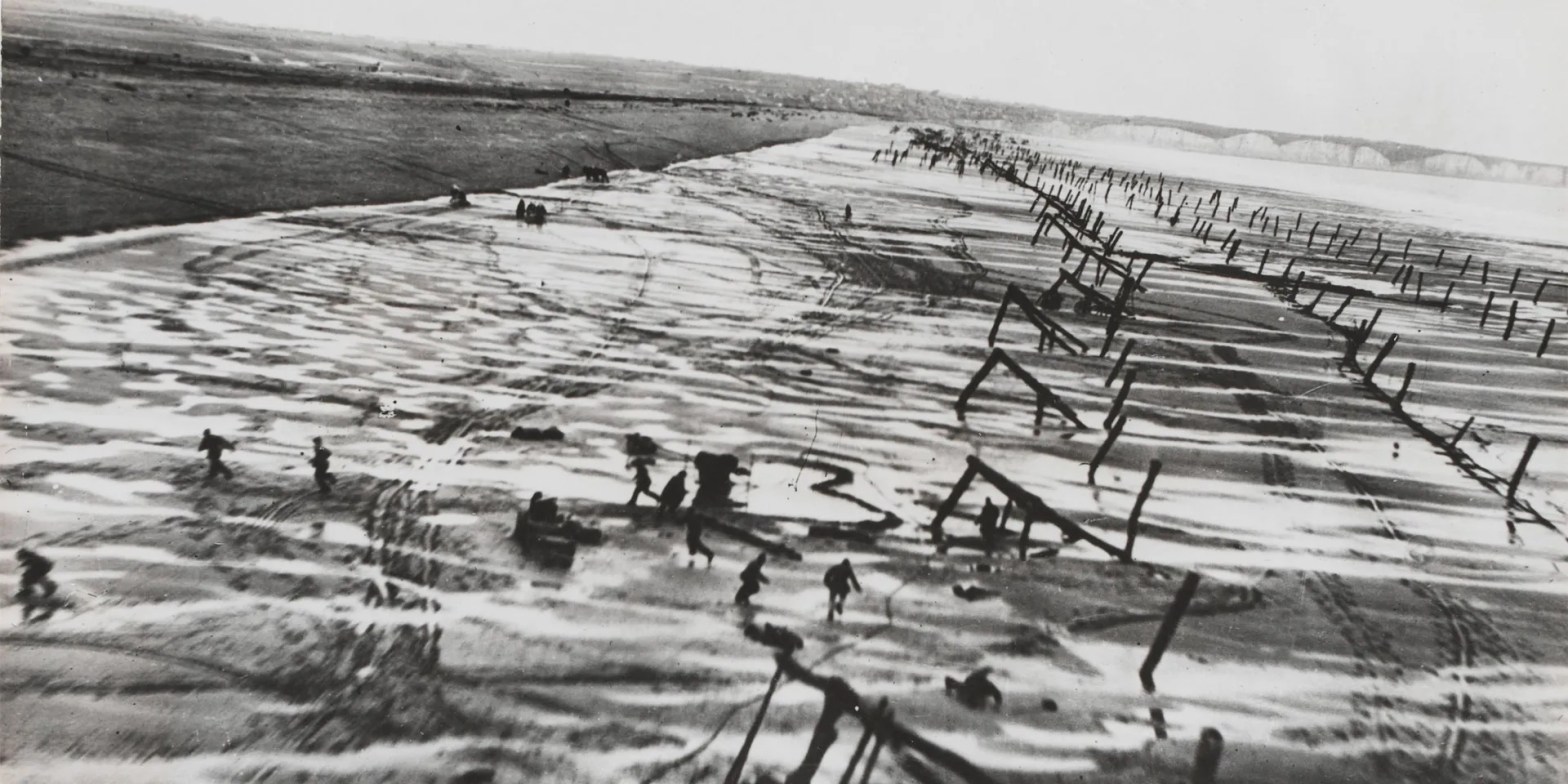
When we think of D-Day, it is of the men who landed on the beaches or parachuted into Normandy. D-Day was a combined arms operation, with the involvement of both the naval and air branches. This included the Royal Navy, and Royal Air Force, with their Commonwealth and Imperial elements, as well as the United States Navy and Army Air Force. Their involvement began before D-Day and continued long into the Battle of Normandy.
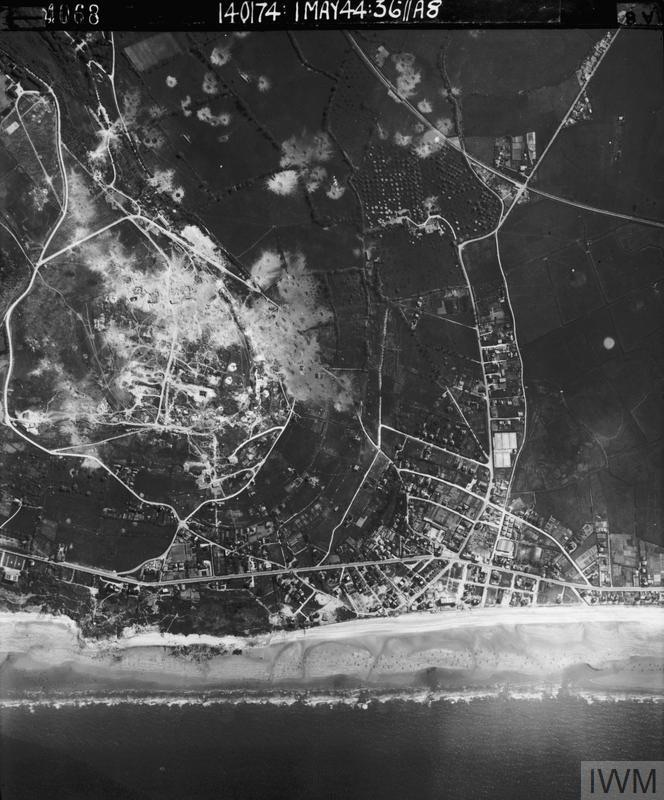
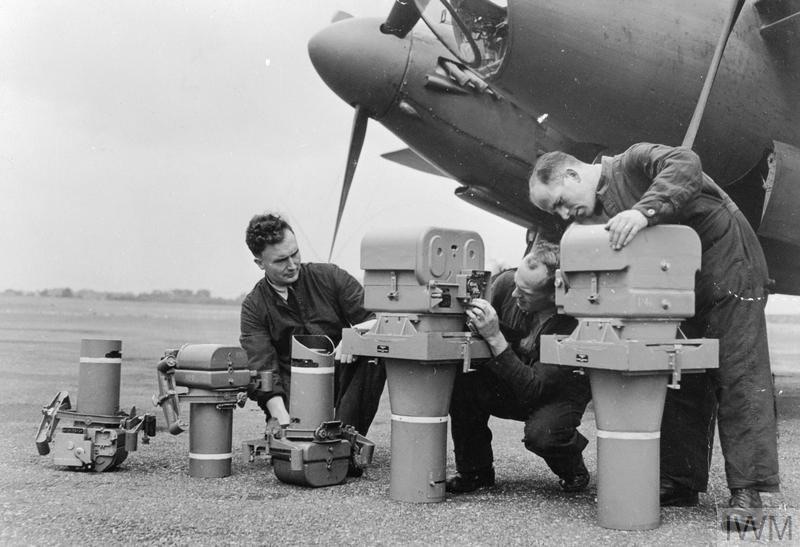
From the early stages, the senior officers responsible for planning D-Day required vast intelligence. For the British, aerial reconnaissance was conducted by several squadrons of the Royal Air Force. These used unarmed Spitfires flying at high speed over the target, with two cameras arranged to give an almost 3-Dimetional image, when viewed through special glasses. These squadrons took thousands of images, all studied in detail. This enabled the planners to direct resources to try to weaken the enemy through bombing and the barrage of naval shells that preceded the landings. This was not perfect. Some gun emplacements that were targets of heavy fire were found to have had their guns moved elsewhere, or guns of smaller calibres than expected, such as at the Merville Battery. Another issue was the incident at Pointe de Hoc, where the United States Rangers undertook a risky cliff climb, to silence the battery, that threatened the landings on Omaha Beach, only to find that the battery was not there. This battery was a deception with the guns sited elsewhere. Several guns within the hidden Maisy Battery were firing until the 9th of June.
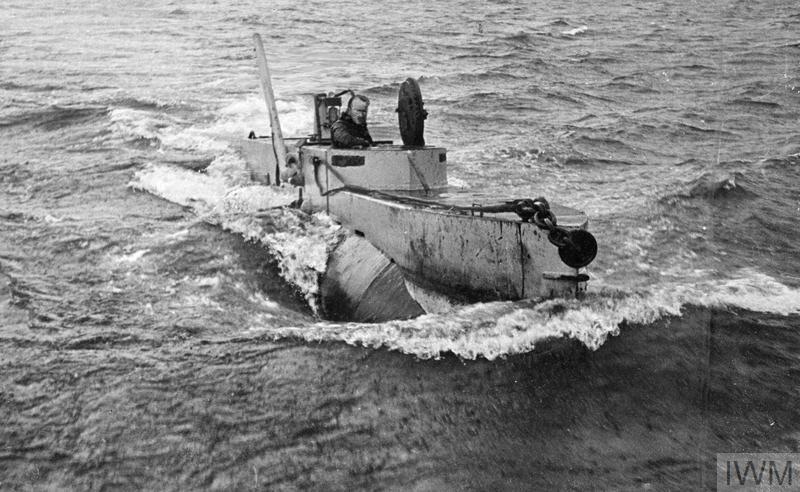
Intelligence was gathered not just from the air. The planners also needed to know about the landing points, where they could land, what equipment could be landed and what difficulties the men would face. The Combined Operations Pilotage Parties were made up of men from the Royal Navy and Royal Engineers. These men travelled by midget submarine to land on the beaches at night. Tasked with taking samples of the beach to test the ability of the sand to support the weight of tanks and vehicles, taking photographs, and closer to the D-Day landings, laying marker beacons to guide the landing craft. These men would spend an average of 5 nights on these missions, spending the daylight hours in the midget submarine on the seabed.
In months before the landings, the Allied Air Forces worked in two ways to change the conditions on the ground. Efforts were made, particularly by the United States Army Air Force, with their heavy bombers and P-51 Mustang, fighter escorts, to cripple the Luftwaffe, by reducing their numbers and fuel stores. Royal Air Force Bomber Command and units of the United States Army Air Force were tasked with preparing Normandy for the invasion, by destroying roads, bridges, and rail infrastructure. Orders were given to keep French civilian casualties to a minimum. This proved difficult, with only gravity-dropped bombs. It is estimated that between 11,000 and 19,000 French civilians were killed during the bombing campaign in Normandy to prepare for D-Day. By the 6th of June 1944, Bomber Command had lost 300 planes with 500 men, missing, injured, or captured, and 1,500 killed from just attacking targets for the invasion.
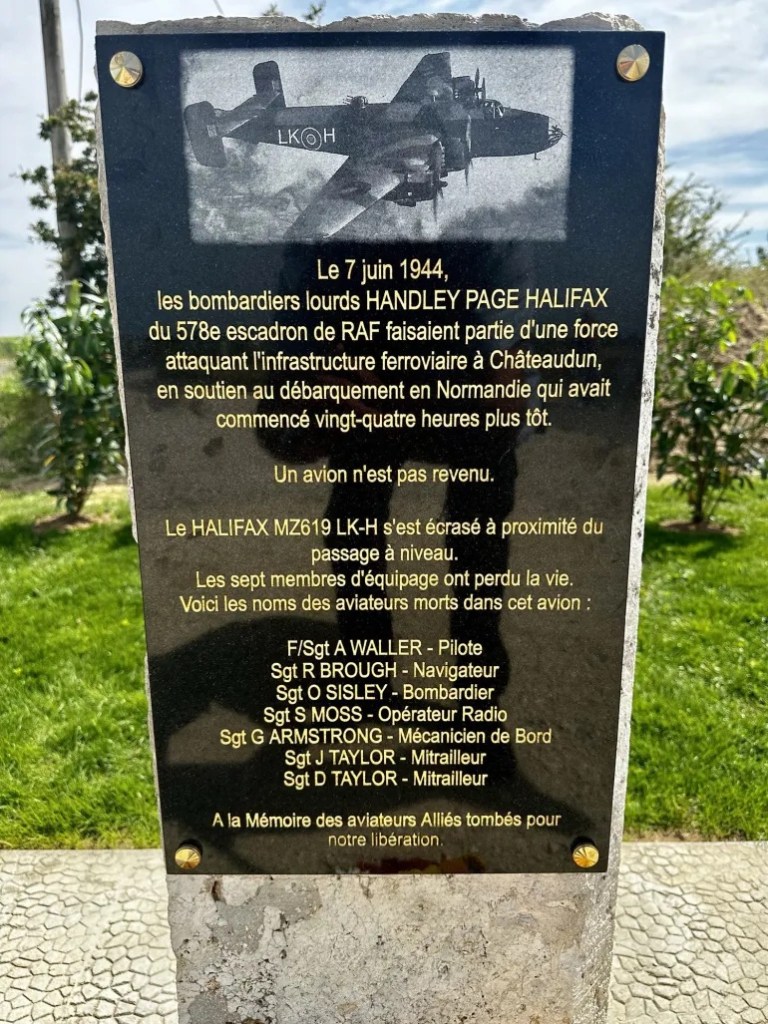
As D-Day arrived, Bomber Command attacked gun emplacements and defences close to the beaches. On D-Day, 11,590 aircraft were involved, of which 5,656 were from the Royal Air Force. Their roles included the bombing defences, searching out Nazi U-Boats to protect the armada of vessels, protecting the skies from the Luftwaffe, air strikes to help ground troops, as well as dropping paratroopers and towing gliders.
The Naval elements not only transported the men and piloted the landing craft but were vital to the safety of the landings. Units were tasked with providing a screen to stop the Germans from launching attacks with fast boats, as happened during a training exercise at Slapton Sands. Mines were cleared in the English Channel to create clear routes for the armada of ships. Battleships, Cruisers, and Destroyers, such as His Majesty’s Ships Belfast, Rodney, Ramillies and Roberts and United States Ship Texas and many others engaged in a massive bombardment from the sea, with thousands of shells fired, from the fleet of mainly Royal Navy and Royal Canadian Navy ships. This bombardment was designed to destroy or disable enemy positions and to limit enemy fire as the landing craft of the first wave approached. In the final minutes before the invasion, the men of the Royal Navy and Royal Marines Landing Craft Obstacle Clearance Unit swam to the beaches and cleared many obstacles to allow the men to land.
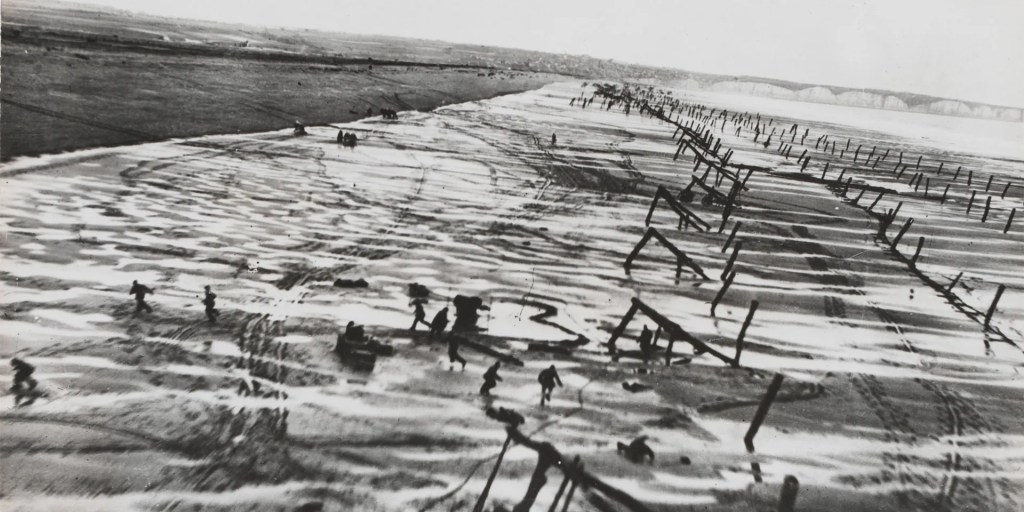
The naval and air elements are an often-forgotten piece of the jigsaw that was Operation Neptune, the amphibious landings of D-Day. Without these men, the invasion would not have been successful.
 Major History