
When you think of the Royal Army Chaplains Department, the faith leaders within the British military, it is easy to think that they only worked on Sundays and had little involvement in the World Wars and other conflicts, or that they were safe behind the frontlines. But this would be wrong.
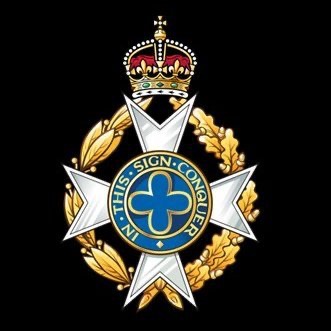
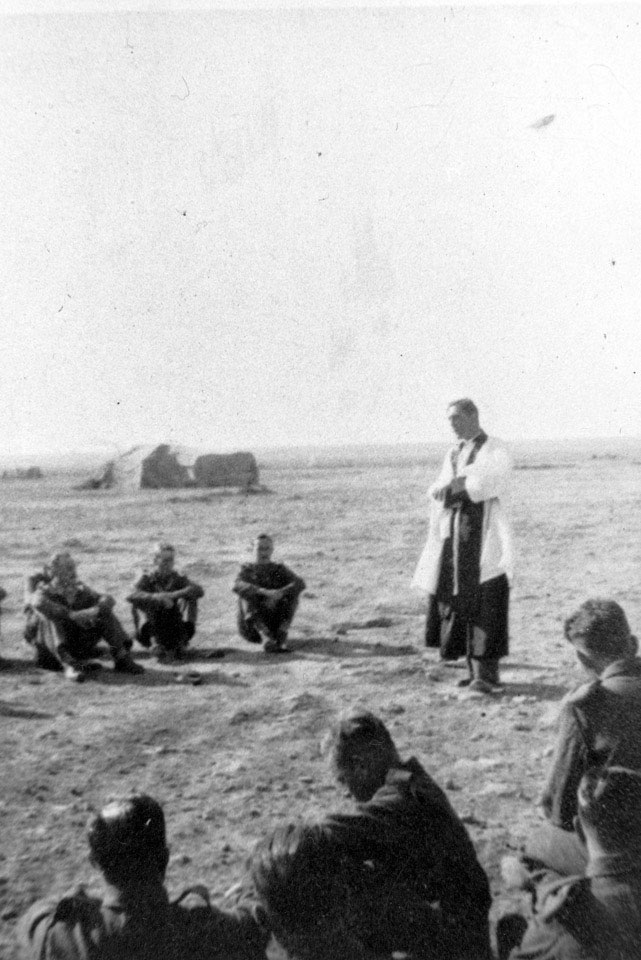
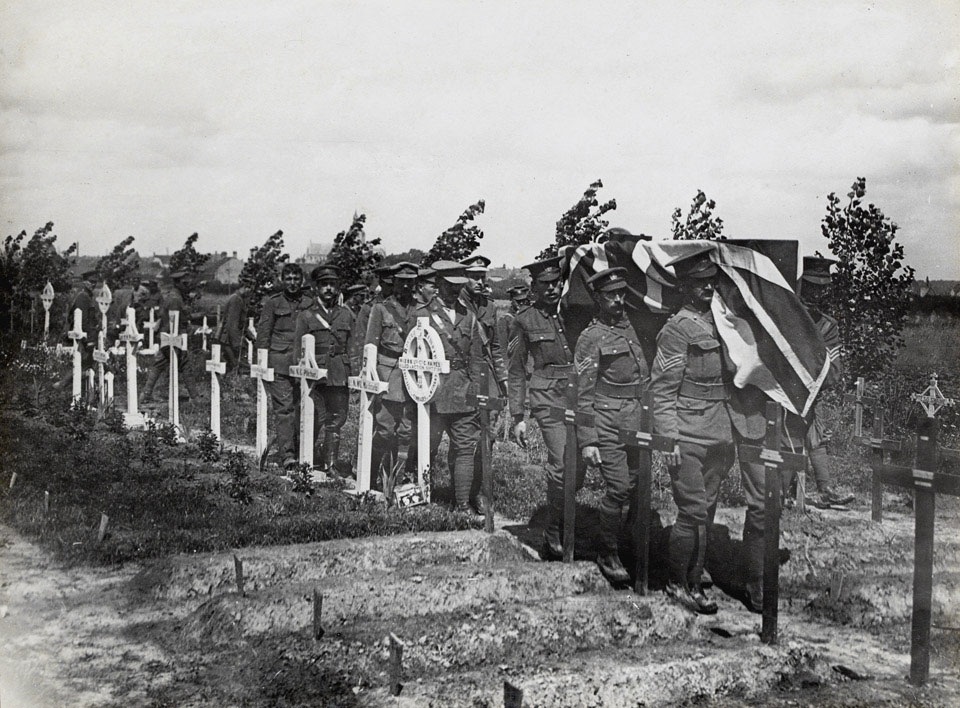
In both World Wars, the scope of the work of the men of the Royal Army Chaplains Department was wide, not just providing religious services. They had the grim task of counting the cost of war, by burying the dead and conducting their funerals. But their work went much further. They delivered spiritual support on the frontline, in No Man’s Land, and behind enemy lines. This spiritual and pastoral support was delivered where and when required, regardless of the faith or denomination of the soldier, sailor or airman, regardless of rank. This support was critical in the First World War for officers who often quickly found themselves in much higher levels of command. For the men of the ranks, many of whom had poor literacy levels, the padres would help write letters home to their families. They often wrote to the families of the men who were killed or wounded.
The padres’ proximity to combat has often seen them assist medical personnel and stretcher-bearers, including treating wounded soldiers. This frequently happened in both World Wars, with the Reverends Theodore Bayley Hardy VC DSO MC and Samuel Frederick Leighton Green MC & Bar, along with countless others having been documented treating wounded soldiers under enemy fire in the First World War. The Reverend Leslie Skinner was documented treating and transporting wounded in the D-Day landings and Battle of Normandy, having been part of the first wave to land on Sword Beach.
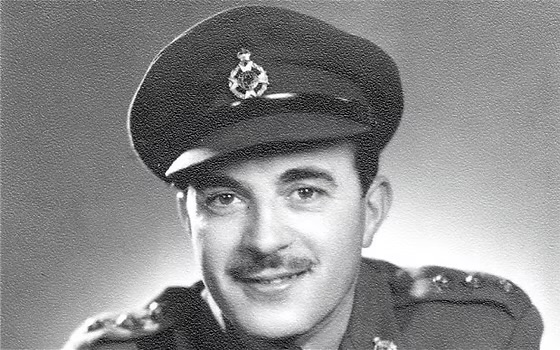
The proximity to the frontline resulted in chaplains being captured by the enemy. In the First World War, one padre was captured and in the Second World War, many became Prisoners of War. The Reverend John Weir Foote VC CD was captured at the Dieppe Raid having on several occasions refused to abandon the wounded men, and thirty men of the Royal Army Chaplains Department were captured in the retreat to Dunkirk.
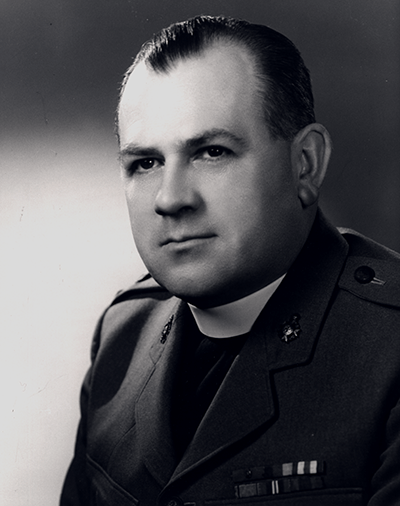
As non-combatants, those chaplains whom the Germans captured were often transported between camps to conduct their spiritual and pastoral work. As part of this work, they compiled education programmes, from basic literacy to almost degree level allowing the Prisoners of War to re-enter society with more skills. Some padres, engaged in work of a more clandestine nature. One padre, travelled between camps with radio parts in his vestments (clergy equipment) bag, while sitting next to an SS Officer, which if discovered would have cost him his life.
There were men of the Royal Army Chaplains Department, awarded various medals for bravery including the Victoria Cross. In the First World War, Samuel Frederick Leighton Green MC & Bar, was awarded the Bar to his Military Cross “For conspicuous gallantry and devotion to duty at Sebourquiaux on 4 November 1918. During the advance, he attended to the wounded, frequently under fire. He went forward and stayed for over an hour with a badly wounded signaller lying out in the open under shell fire until the stretcher-bearers could fetch him away.” Three padres were awarded the Victoria Cross in the First World War. Including Theodore Bayley Hardy VC DSO MC, who throughout three particular actions, at the age of 55, having already been made a Companion of the Distinguished Service Order and been awarded the Military Cross for bravery in the face of the enemy, continued to put the lives of others above his own. Including digging a buried wounded soldier from under fallen masonry while under fire and making his way to within ten yards of an enemy pillbox, accompanied by one armed serjeant (correct spelling as attached to a unit that used that spelling) to rescue a wounded soldier, dragging him back to safety.
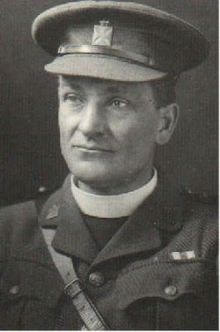
In the Second World War, the Reverend George Hales MC was awarded the Military Cross, for repeatedly entering a minefield to retrieve wounded soldiers, dragging them to safety. The only Victoria Cross awarded to a chaplain in the Second World War was awarded to Reverend John Weir Foote VC CD. In the disastrous Dieppe Raid, he continually exposed himself to mortal danger, and extremely heavy enemy fire to treat wounded soldiers and to deliver them to the aid post. Having ample opportunity to leave, he refused to abandon the men of his flock, consigning himself to be a Prisoner of War in the hands of the Nazis.
Serving so close to the frontlines, put the chaplains at risk of not just being captured but of being wounded. The Reverend Theodore Bayley Hardy VC DSO MC died of wounds and Reverend Samuel Frederick Leighton Green MC & Bar was wounded by shrapnel and gassed. In the First World War, 177 men of the Royal Army Chaplains Department were killed, many have no known grave, including the Reverends John Kellie and Herbert Hinton East, who are commemorated on the Menin Gate Memorial to the Missing. In the Second World War, 124 chaplains were killed, with some commemorated on memorials to the missing. This included the Reverend Ernest William Funnell who is commemorated on the Rangoon Memorial.
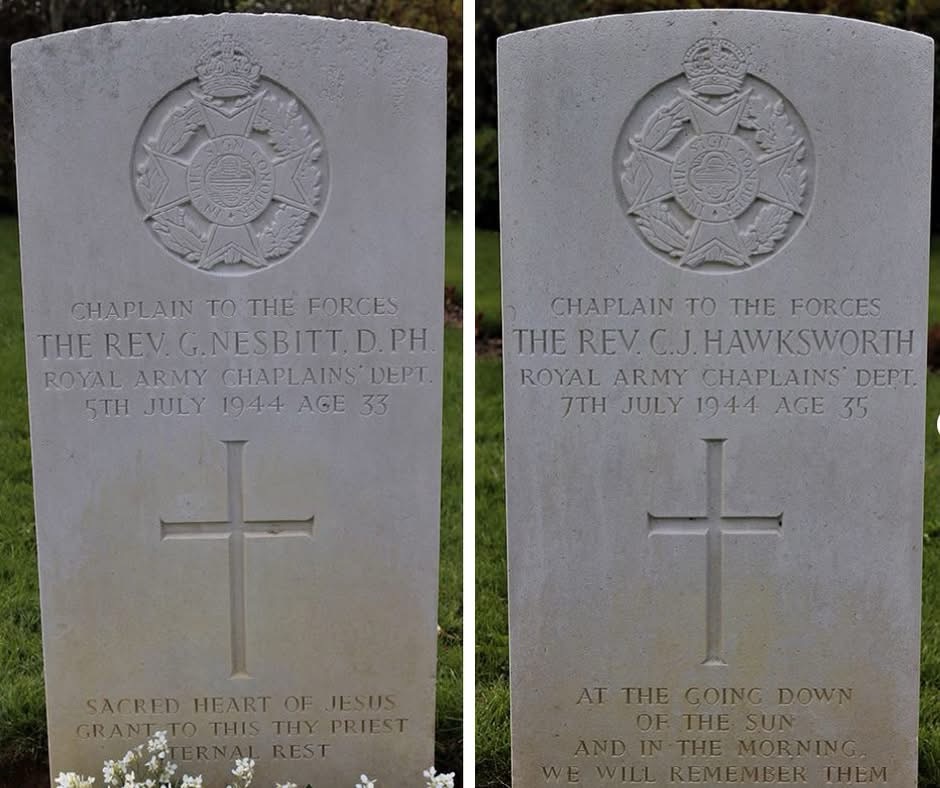
Chaplains were mainly Christian, with many being of the Church of England, Roman Catholic Church and Methodists but there were also Jewish Chaplains. The most famous burials of the Royal Army Chaplains Department chaplains are in Jerusalem War Cemetery in Normandy. The Reverend Cecil Hawksworth was a Church of England Vicar attached to the 6th Battalion the Durham Light Infantry, who was killed. His funeral was conducted by the Roman Catholic Father (serving as Reverend) Gerald Nesbitt, attached to the 8th Battalion the Durham Light Infantry. During the funeral, Father Nesbitt was killed by an artillery strike. Aptly, the two chaplains are buried side by side, a fitting symbol of their deaths and the work of the Royal Army Chaplains Department.
 Major History