
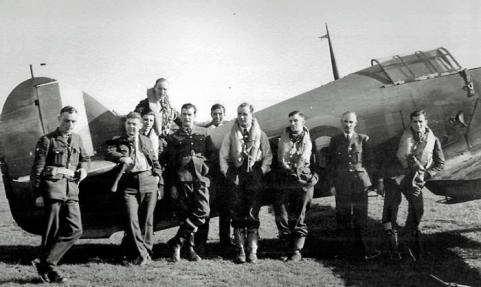
London is the often focus of air defence of the United Kingdom, but this was only one part of the air defence of the United Kingdom in the Second World War. Raids by naval ships and zeppelins and eventually aircraft highlighted the danger that raids could pose to the United Kingdom. The pre-war thinking of many air theorists, including Douhet, and even the Prime Minister, the Right Honourable Stanley Baldwin, in 1932, highlighted the belief that the bomber would always get though. Not many years after that speech, serious efforts were conducted to try and limit the number of bombers getting though.
The North East of England, the area of Northumberland, County Durham and the North Riding of Yorkshire. These are the pre-1974 counties, so roughly the area between the Scottish Boarders and just south of Scarborough. This area was one that was highly industrialised and vital to the war effort in any coming war, this led to the deliberate positioning of defences. These industrialised areas included, mining, ship yards, armaments factories, steel works and chemical plants. All of these plants would be vital to the nation in a time of war. Some defensive training existed before the war, with some Territorial Army units being trained in a Heavy Anti-Air role. All of this was advanced immediately after the war was declared and in the months and early years of the Second World War.
The critical infrastructure of the North East was a big target for raids, and this was expected. In the placement of Chain Home, Chain Home Low and Chain Home Extra Low sites, 18 were positioned in the North East. This was to create an early warning of raiders in the North Sea. Of these sites, 10 were Chain Home Low, 4 were Chain Home and 4 were Chain Home Extra Low. This created a net of radar that covered various altitudes of the airspace over the North Sea. Chain Home, the early radar, had a limitation. It could not see the enemy aircraft once they had passed the coast of the United Kingdom, this left the fighter squadrons at a disadvantage, and placed all the work once the enemy had passed the coast on the Royal Observer Corps. This was augmented starting in 1941 by the addition of 3 Ground Control Intercept Radar’s that worked in a manner that gave 360° coverage. All of these radar sites required a workforce, which, in these roles, were filled with many women of the Women’s Auxiliary Air Force. (For a book on women in the Royal Air Force Air Defence, see Dr Sarah Louise Miller’s book “Women Behind the Few”) The Royal Observer Corps next took over the mantel. They observed planes from the ground passing their information into the system. All this information gave the pilots of the Royal Air Force a fighting chance to be able to limit the damage the Luftwaffe could do, both in terms of lives and of damage to infrastructure, factories and homes.
Once the signals had been passed onto control units, such as the 13 Group Control Room at RAF Newcastle, which then scrambled the various fighter command units from bases near Newcastle, County Durham and the North Riding of Yorkshire. Those fighters were then guided to the approximate locations of the waves of enemy bombers. These fights were a dangerous affair. Many planes were damaged, men injured as well as men killed. Training accidents, make the statistics harder to identify how many men were lost to enemy action. But without the bravery of the pilots, there would have been more planes arriving over their targets and more death and destruction on the ground.

From the ground these raiders were attacked by Heavy Anti-Aircraft Batteries and lighter batteries. Many of these batteries began as male Territorial Army Units, but soon due to the exigencies of war, the calculations and aiming of these guns, via the predictor system, was turned over to female volunteers of the ATS (Auxiliary Territorial Service), with men still pulling the trigger. This had the effect of at key locations of filling the sky with metal putting the raiders at grave risk.
This system was never going to prevent every raid or every bomb from falling. Hundreds and if not thousands were killed in the course of the war, both including RAF personnel and civilians, either at work or at home. Between the Scottish Boarder and the River Tees, 298 raids were conducted, with more between the Tees and the boarders of the North Riding of Yorkshire. These raids were damaging, with in some instances people passing down memories of houses being shot at and even farmers in fields having bullets fired towards them.

In 1942, in response to a Bomber Command Raid on Lübeck, the German’s launched a series of raids against towns of cities based on cultural significance rather than military or economic significances. On the 29th of April 1942, the Germans launched a raid on York with the aim of destroying war production and cultural buildings. This raid on York highlights the weaknesses in the system, as the German planes had managed to slip though the signals net, with reports of the initial attack being reported to the RAF Control by the Constabulary. Despite the attacks aims of the cultural landmarks many of the bombs fell around York’s railway infrastructure, and consequently the historic Minster survived. Whereas in Durham we are left with a conundrum and a lot of local myth and legend. In the period of these raids on cultural targets, bombs fell outside of Durham City and several reports mention mist, which can occur in and around Durham. This has been over the years, due to Durham Cathedral being the shrine and burial place of St Cuthbert, attributed to one of the miracles of St Cuthbert, and has gone down in local legend.
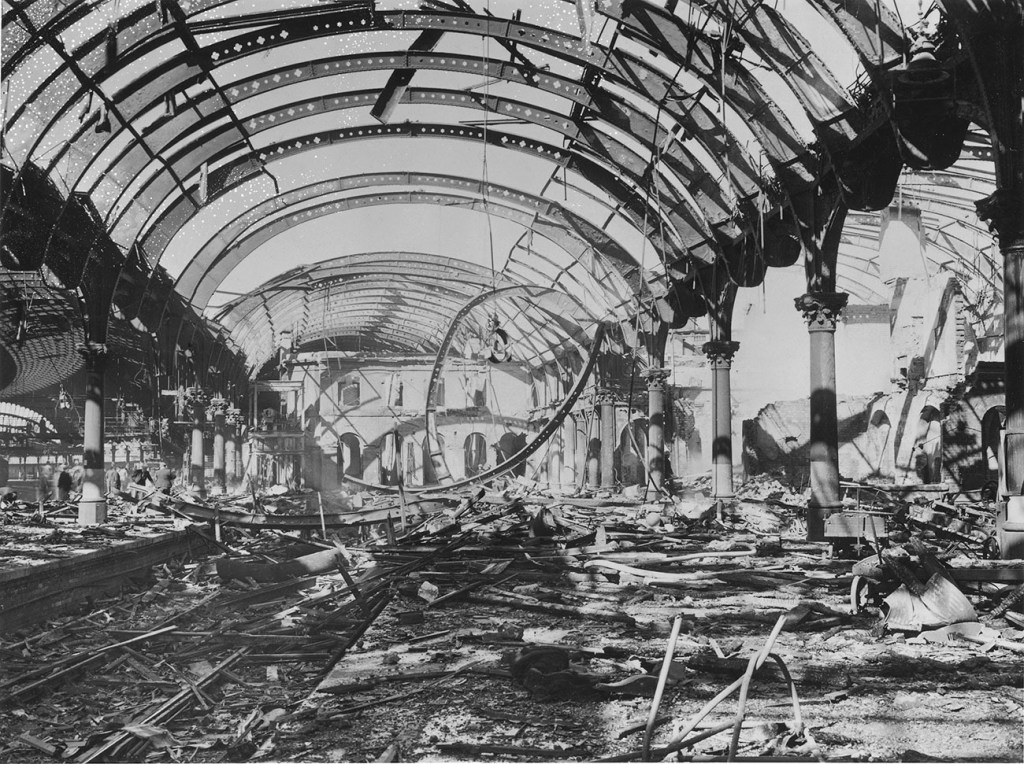

The North East and the North Riding of Yorkshire were prime industrial targets for the German air raids. But without the diligence and bravery of the men and women engaged in air defence, the war in the North East could have been a more destructive and bloody affair.
 Major History